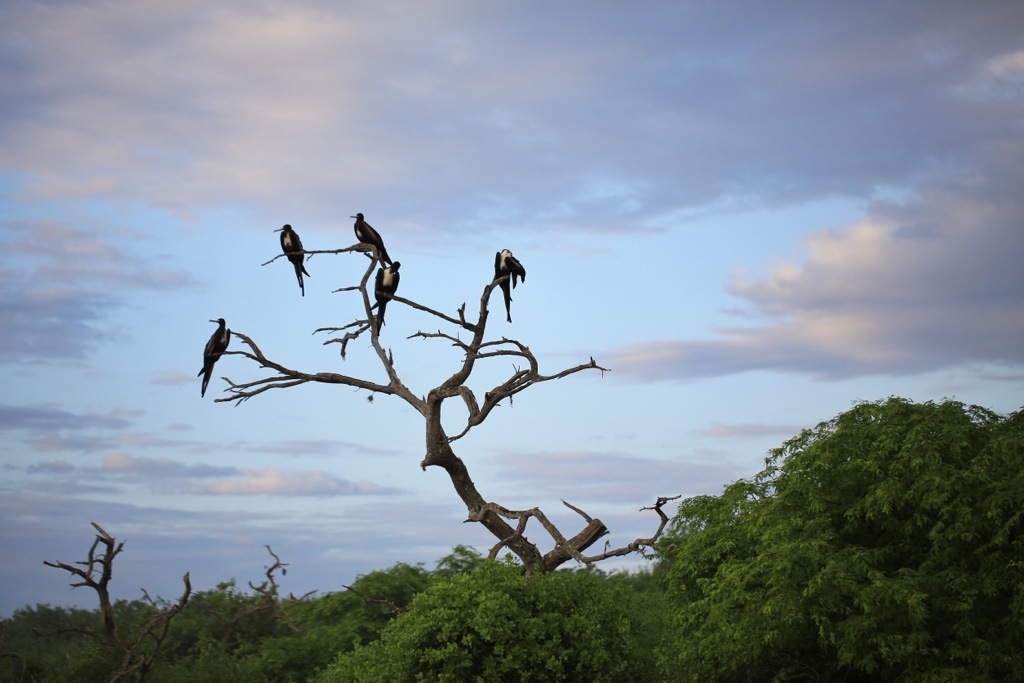
 Apart from the sea lions taking up all the available seats on the pier, this was our first glimpse of things to come. These Frigate birds are the most graceful birds I have ever seen. In the days to come, we would see them riding the wind currents all over the Galapagos, but they never failed to amaze.

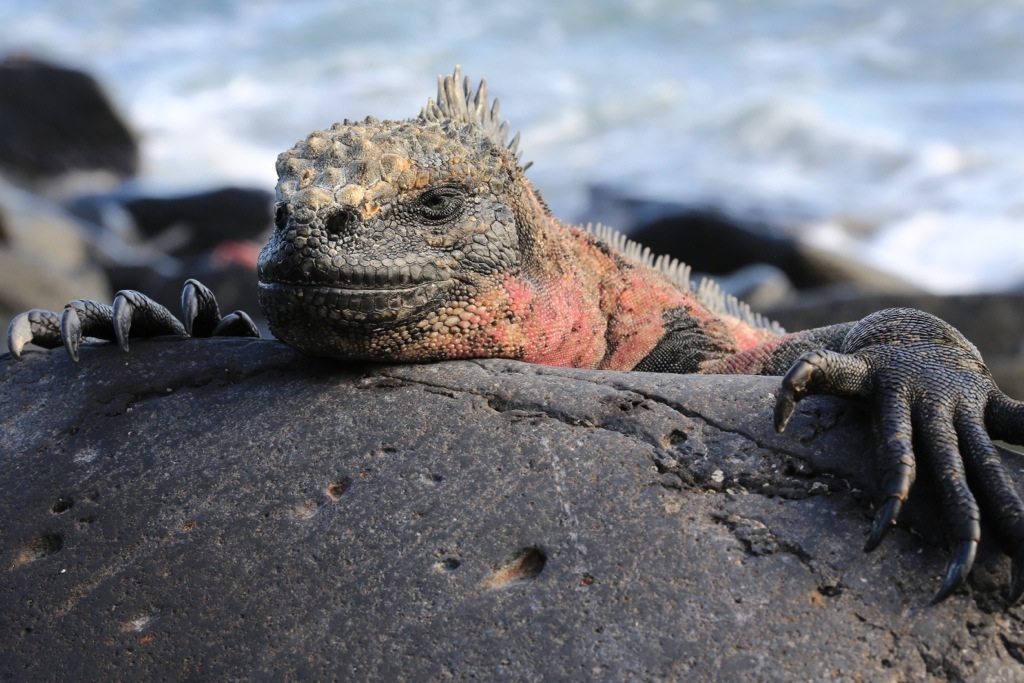
They say that the Galapagos is the only place on earth that you can have a staring competition with the wildlife and lose. This Red and Green marine iguana on Espanola Island proves the theory – even with the distraction of having a whopping big fly running around on its head. These marine iguanas are unique to Espanola Island. They eat a particular type of red algae but they can’t digest the colouring, which accumulates in their skin. They hang out on all the sea cliffs waiting to heat up enough to take a dip. Some of them actually leap off the cliffs rather than making their way to the water’s edge.
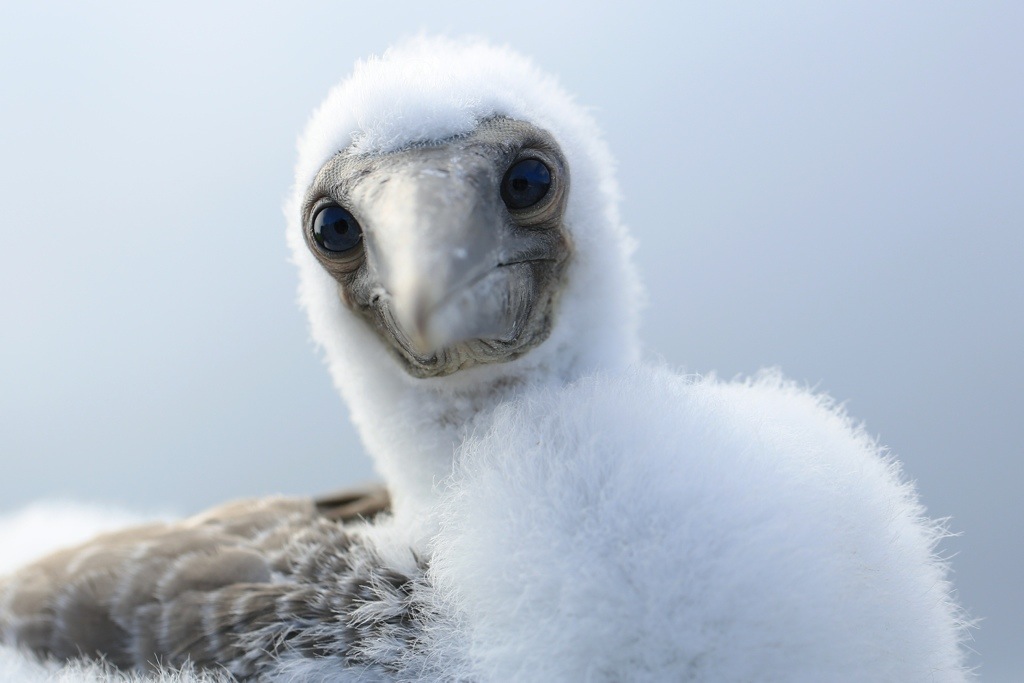 I lost the staring competition with this Nazca Boobie chick as well. When they get older, their eyes turn yellow.
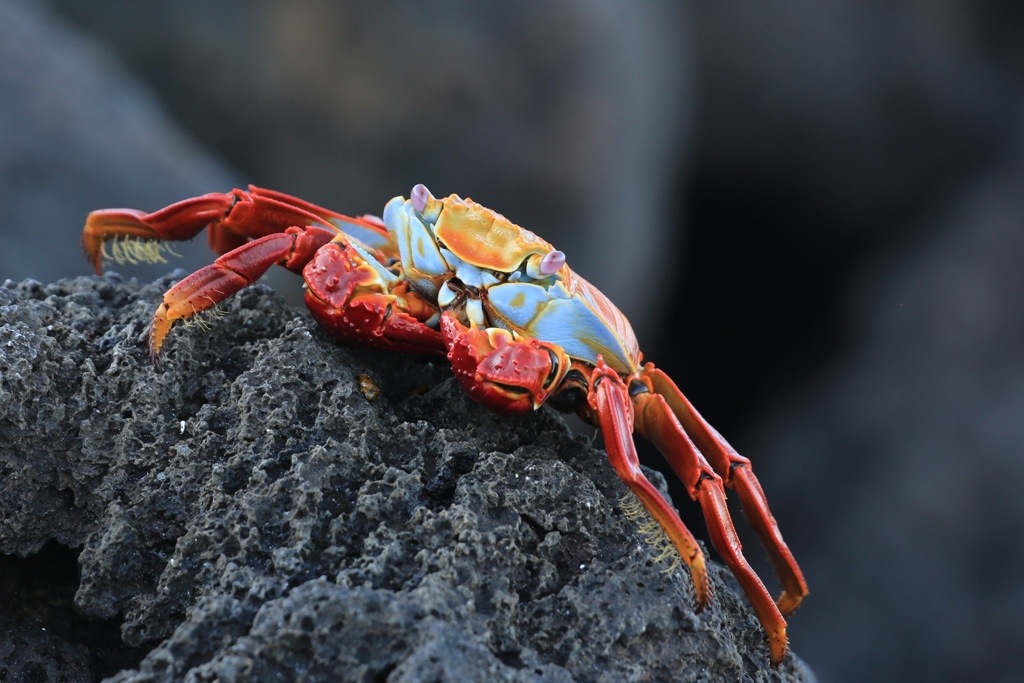 I took so many photos of these Sally Lightfoot Crabs. They’re everywhere. They eat the algae off the rocks and just about anything else they can get a hold of (including each other!). Everywhere you go, there’s these pink eyes staring at you from every nook and cranny. They look pretty cool up against the black lava rock.
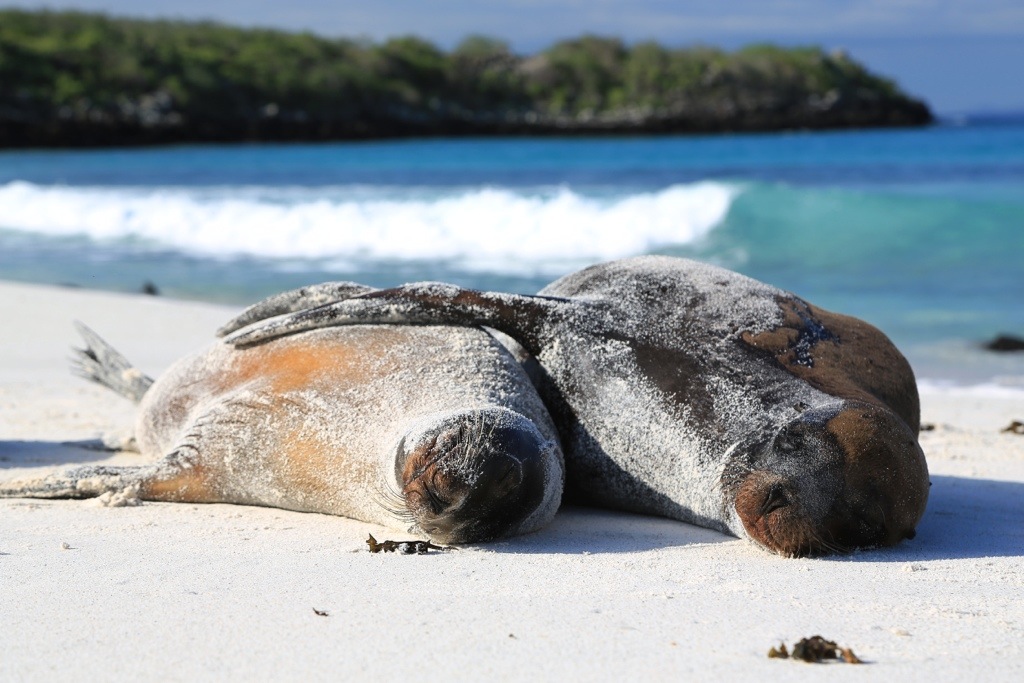 The Galapagos is overrun with sea lions. They pretty much owned this beach. We were walking amongst them on this beach and not one of them could be bothered budging (especially this spooning couple). You had to step over them to get to the water in some places.
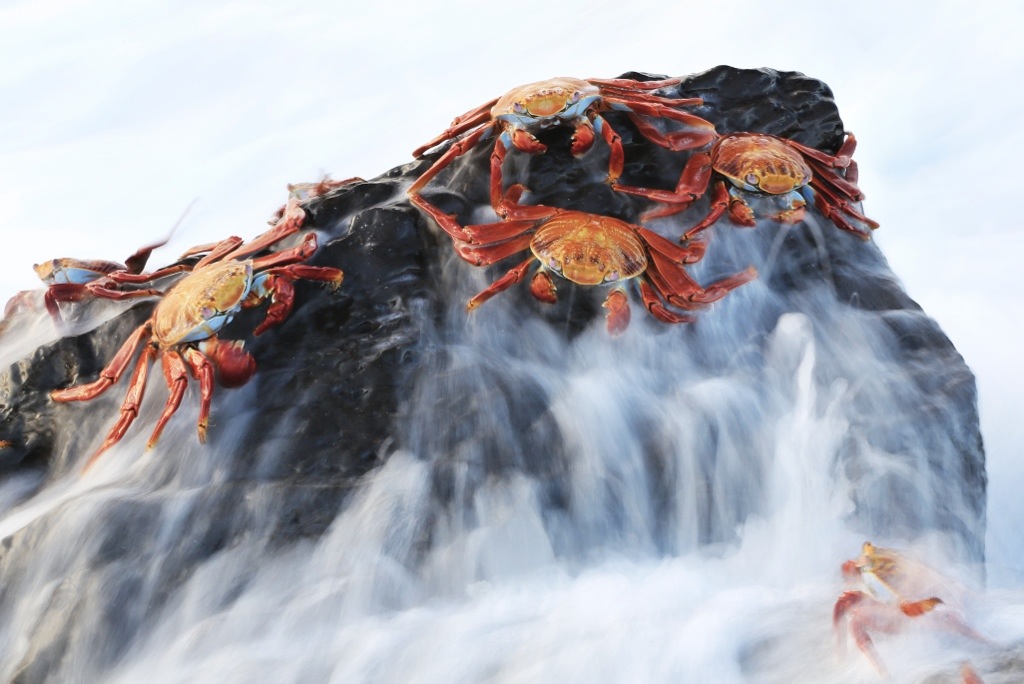 The Sally Lightfoot crabs were almost being knocked off their rock in the surf, but no matter how hard the waves crashed on them, they still kept staring at me whilst I took this photo. Mind you, I nearly wrecked the camera to get this photo.
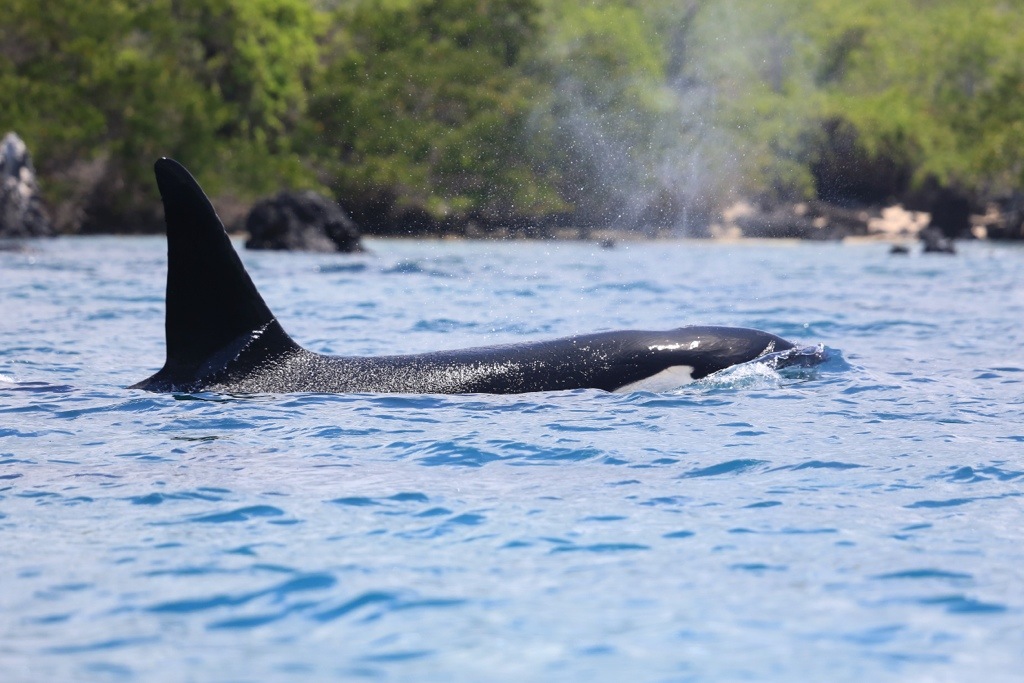 We were about to get in the zodiacs to go snorkelling in this bay off Floreana Island when this pair of Orcas came past hunting sea lions. Can you imagine if we had got in the water just five minutes earlier wearing our black wet suits and fins!
 This is the fish market on Santa Cruz Island. The fishermen clean their catch and sell direct to the public, but it’s their helpers that really steal the show. Every time we saw it, that big sea lion looked fatter and fatter.
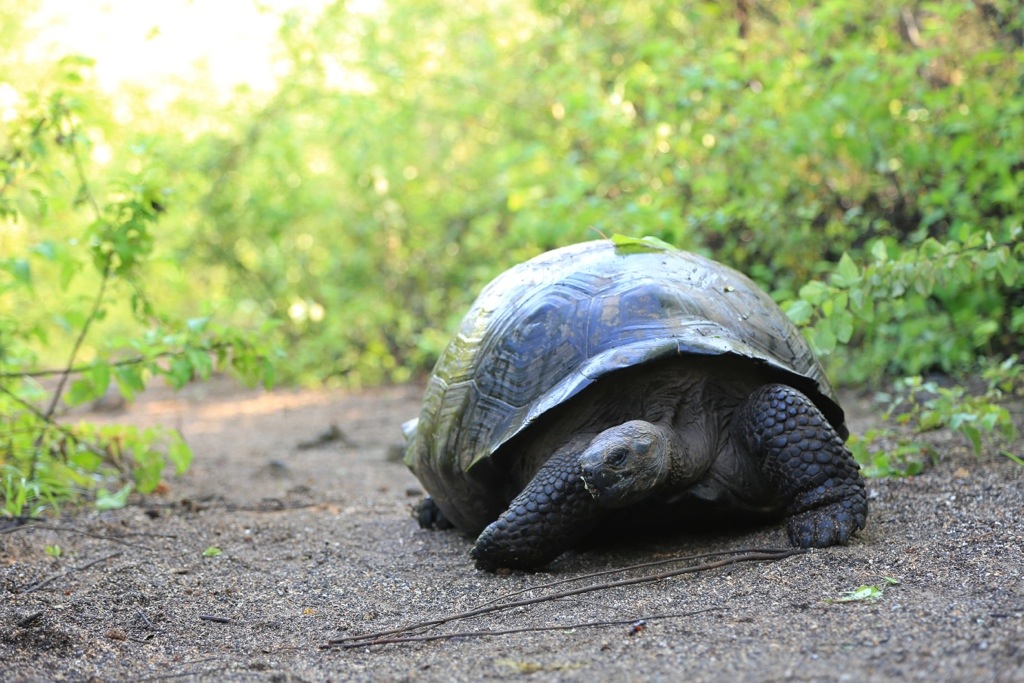
 We finally caught up with these big guys in the highlands of Santa Cruz Island. Apparently they can weigh about 200kg and this big boy wasn’t moving for anyone.
 Chez stalking the tortoise
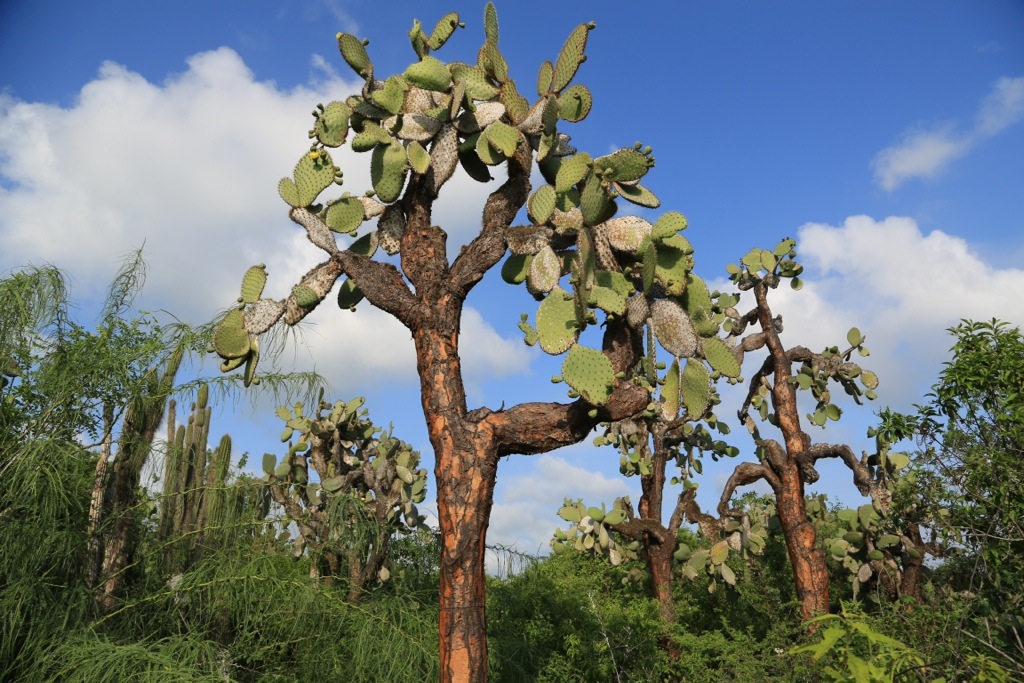 These cactus trees are endemic to the Galapagos.
 We went snorkelling at least once a day and on nearly every occasion, we ran into these green sea turtles. Every time we’ve seen these guys in the past (diving etc) it’s been such a thrill to get anywhere close to them. On the Galapagos, we were suffering from green turtle overload. In some spots, we’d be swimming with maybe 15 of them. At one place, one of the guys in our group ran into three of them because he wasn’t watching where he was going. You can just make out Chez in the background – it doesn’t look like it because the turtle is so big, but she’s close enough to reach out and touch it
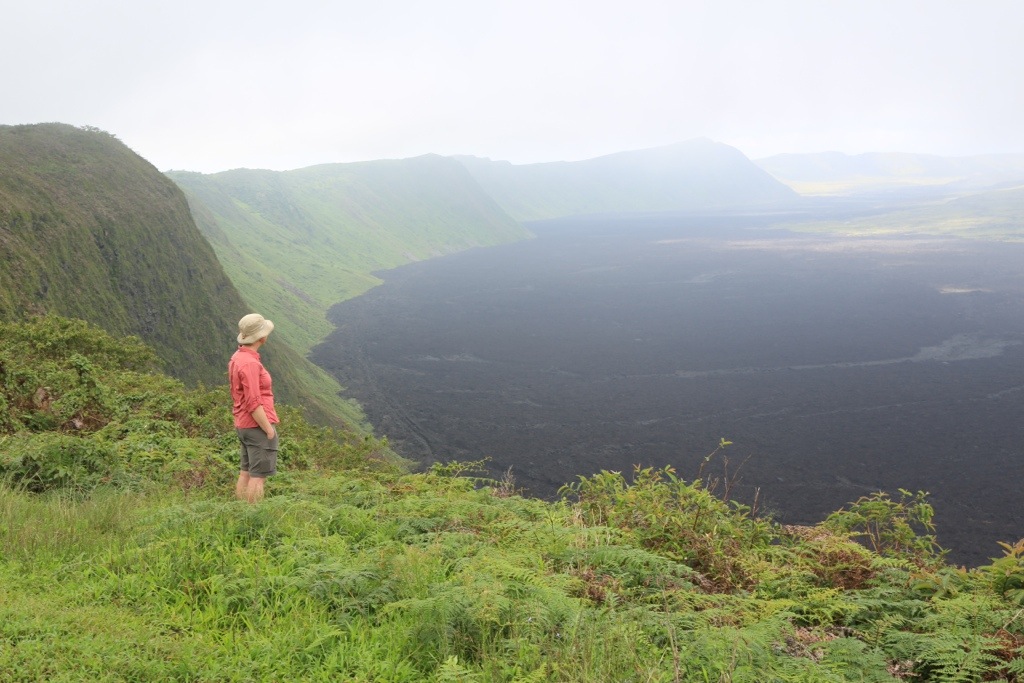 The Galapagos are a series of volcanos and this is the caldera of Sierra Negro volcano on Isabela Island.
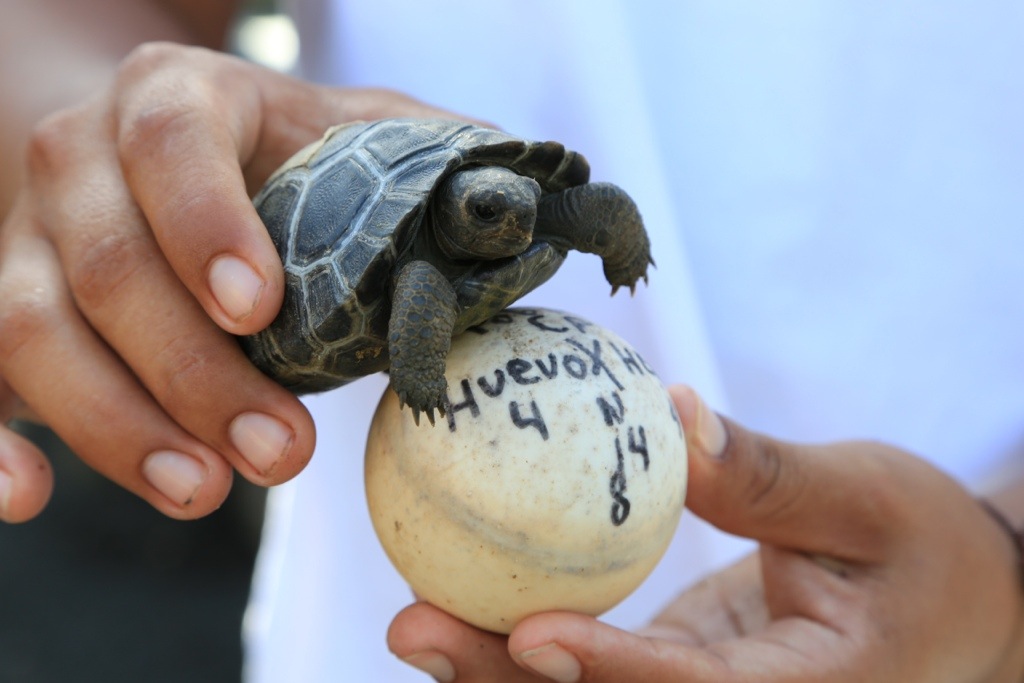 They’ve got a stack of breeding centres for the tortoises on some of the islands. You just wanted to stick one of these guys in your pocket and take it home!
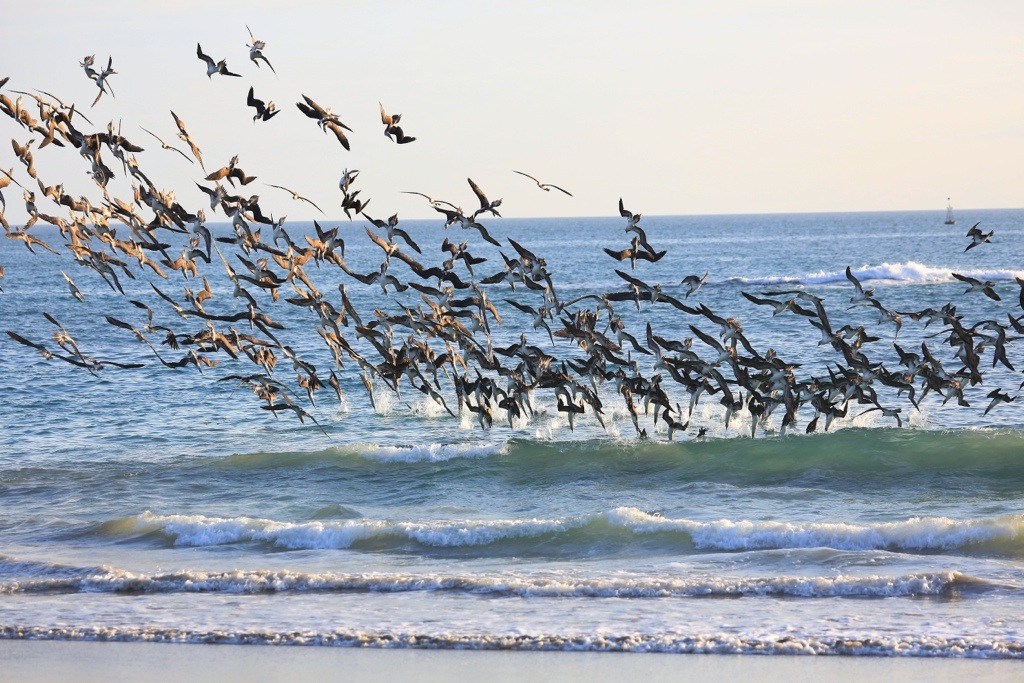 We were just walking around on the beach when these blue footed boobies went into a feeding frenzy just past the breakers. You can’t see it in this photo, but there’s a couple swimming in the middle of the melee. Not the sort of thing you’d expect to start raining down on you when you’re taking a dip.
 The western islands of the Galapagos are the newest and still look like a lava field. Amazingly, there are fish swimming in some of the flooded sink holes and some other unlikely guests…
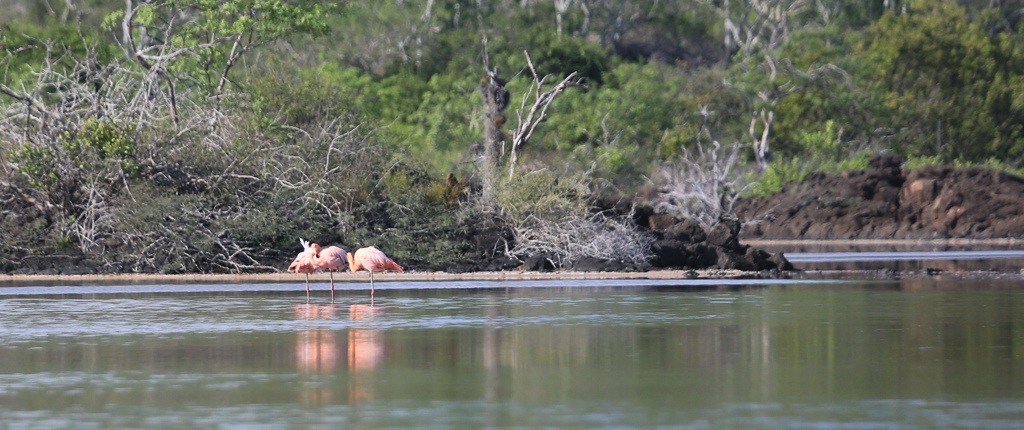 These Flamingos were among some of the unusual occupants of the lava fields.
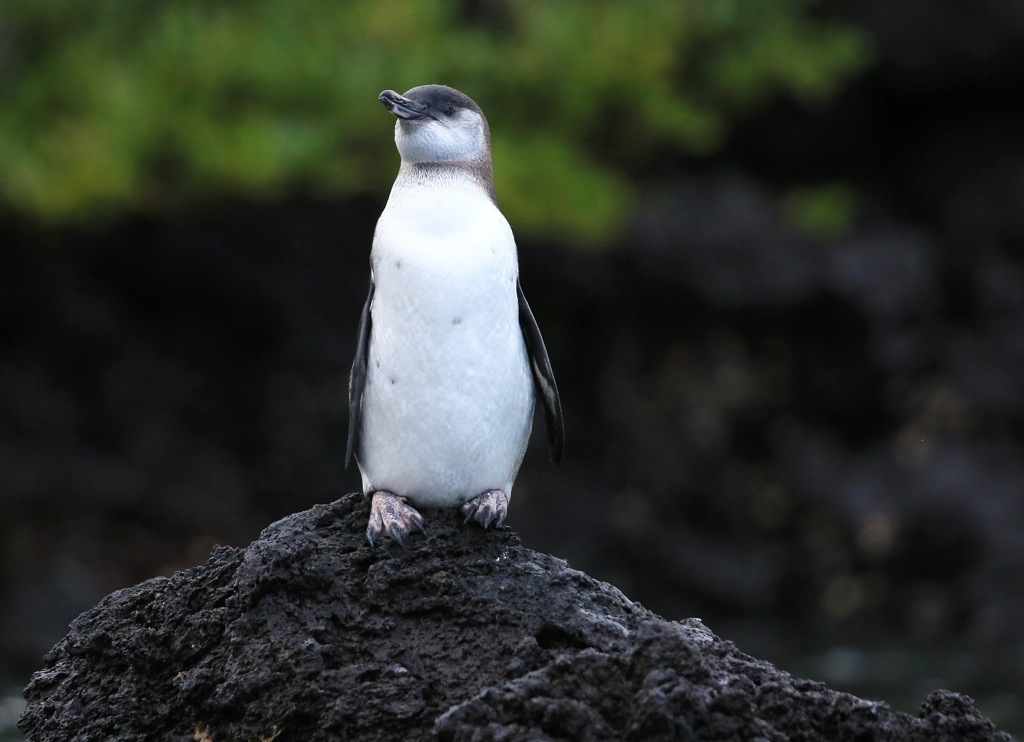 Who’d think you’d find penguins at the equator. We actually got to swim with these guys ..briefly.
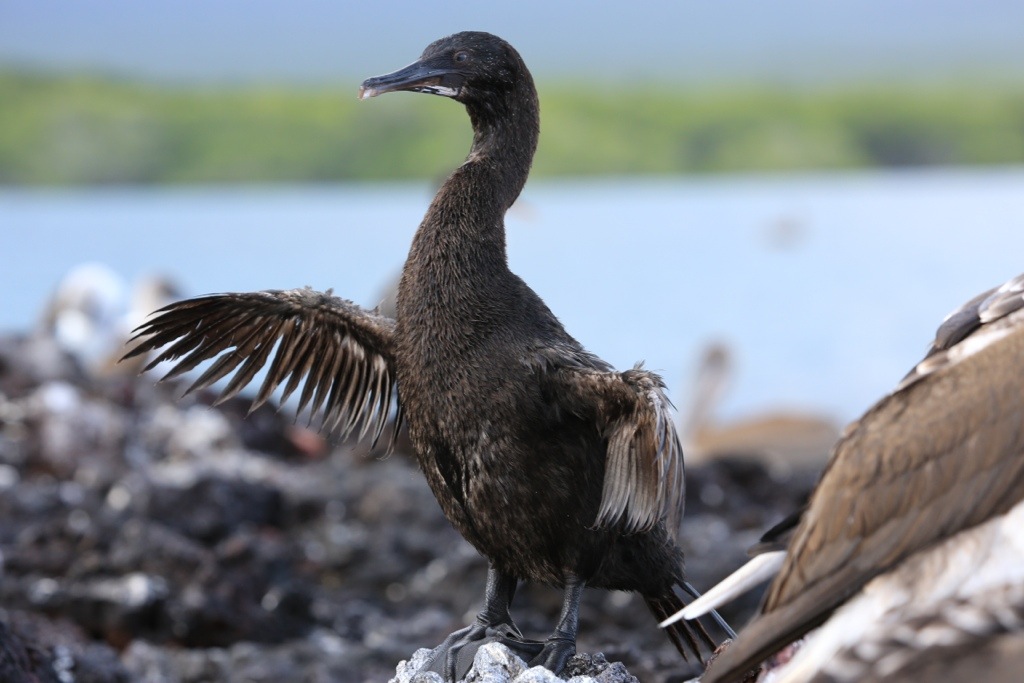 All the cormorants in the Galapagos have lost their ability to fly because they have no predators on land.
 We spent ages looking for spotted eagle rays and mantas in Mozambique and here they are just swimming around in a lagoon so close you could almost grab them from the zodiac.
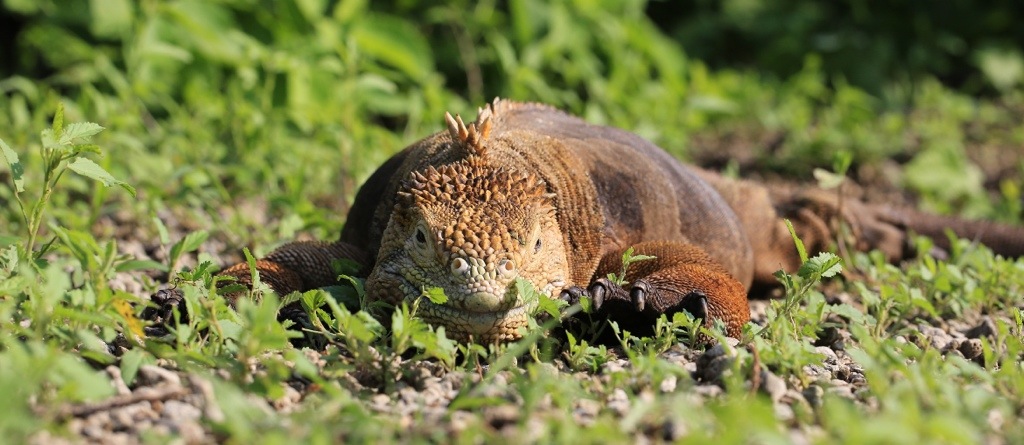 This is a land iguana. It’s a lot heavier than the marine version and also has a pointier face because it doesn’t have to eat algae off the rocks. Adaptation…
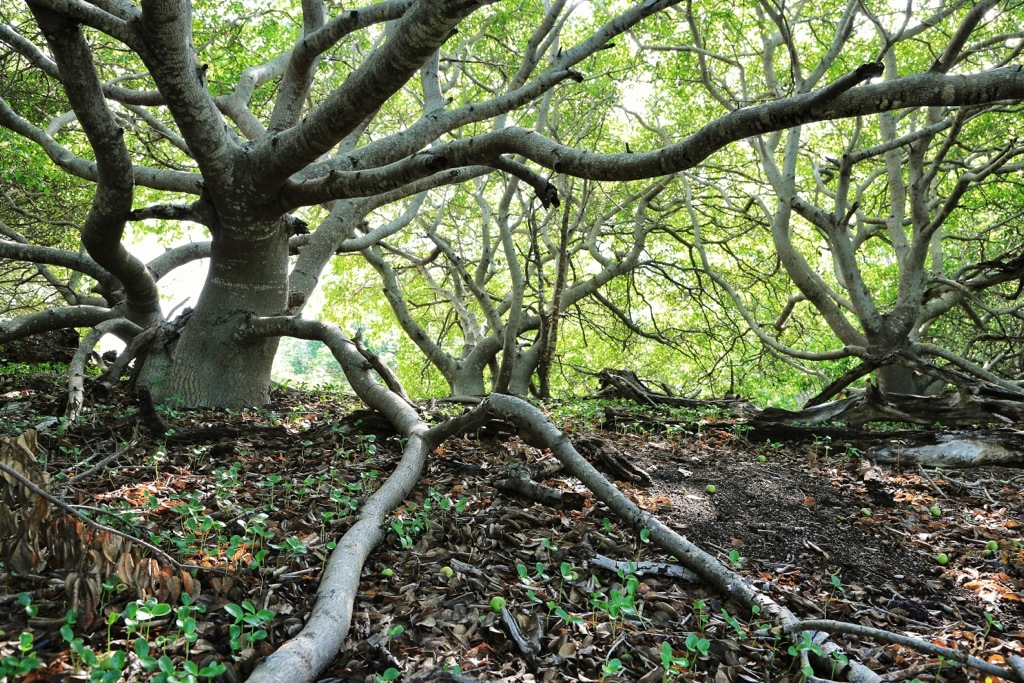
 Stand off on the walking trail. We walked around!
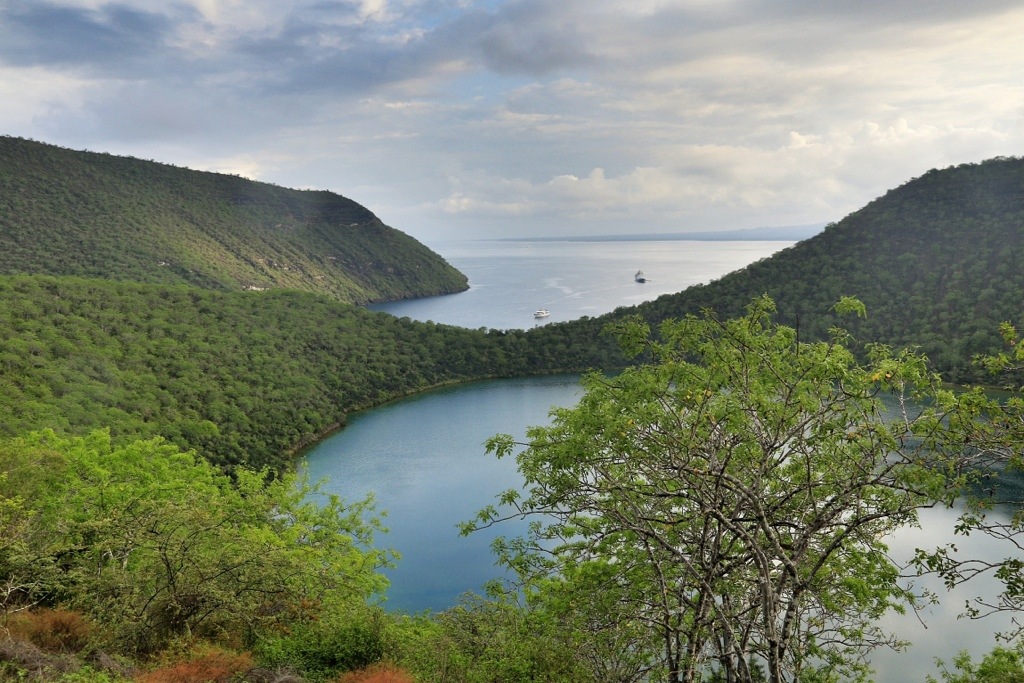 Charles Darwin Lake
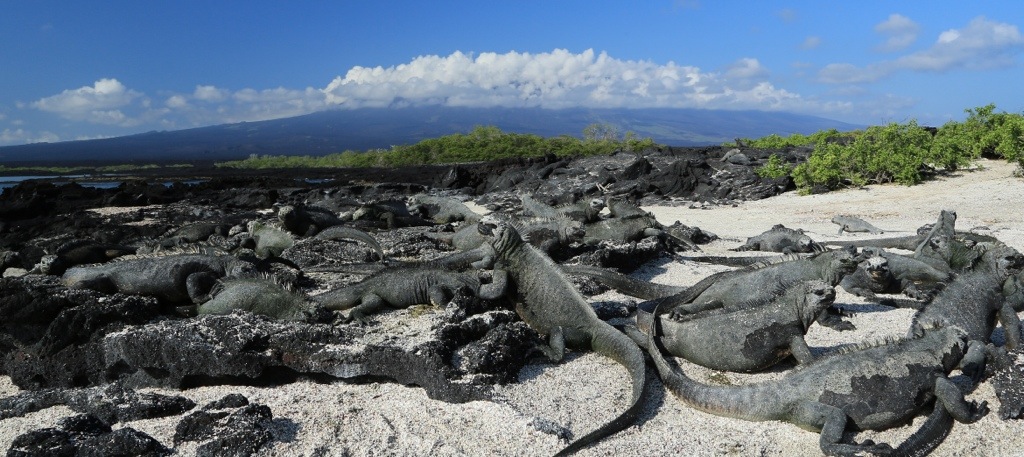 We got to this beach on Isabela Island before these marine iguanas had warmed up so you practically had to jump over them in spots to get past.
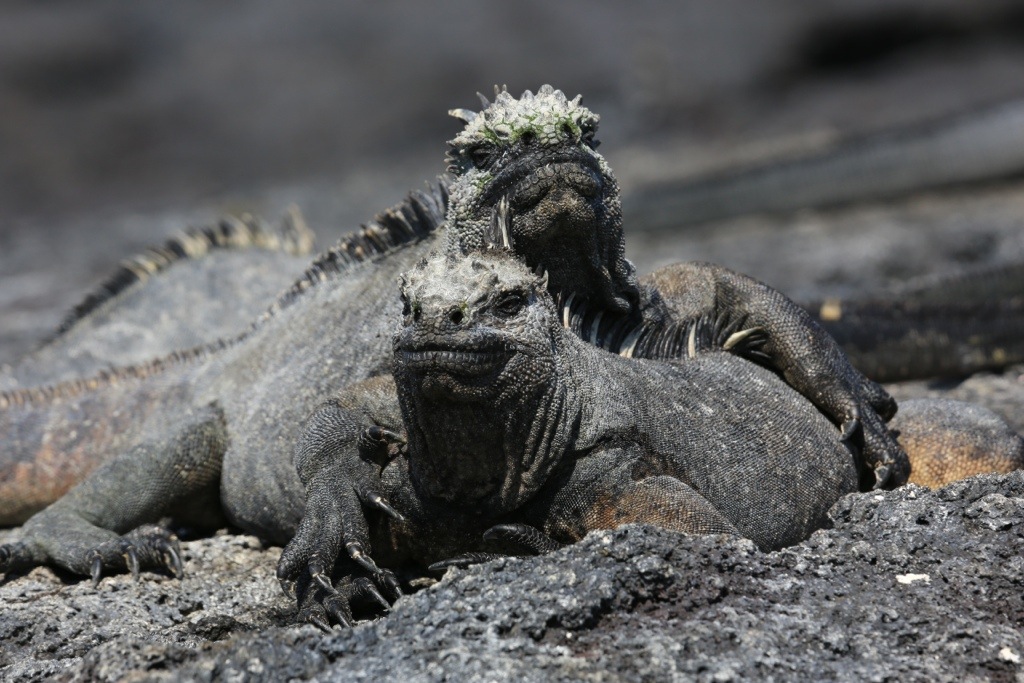 A face only a mother could love…
 These cactus are endemic to the Galapagos. They’re one of the first plants to show up on the lava field.
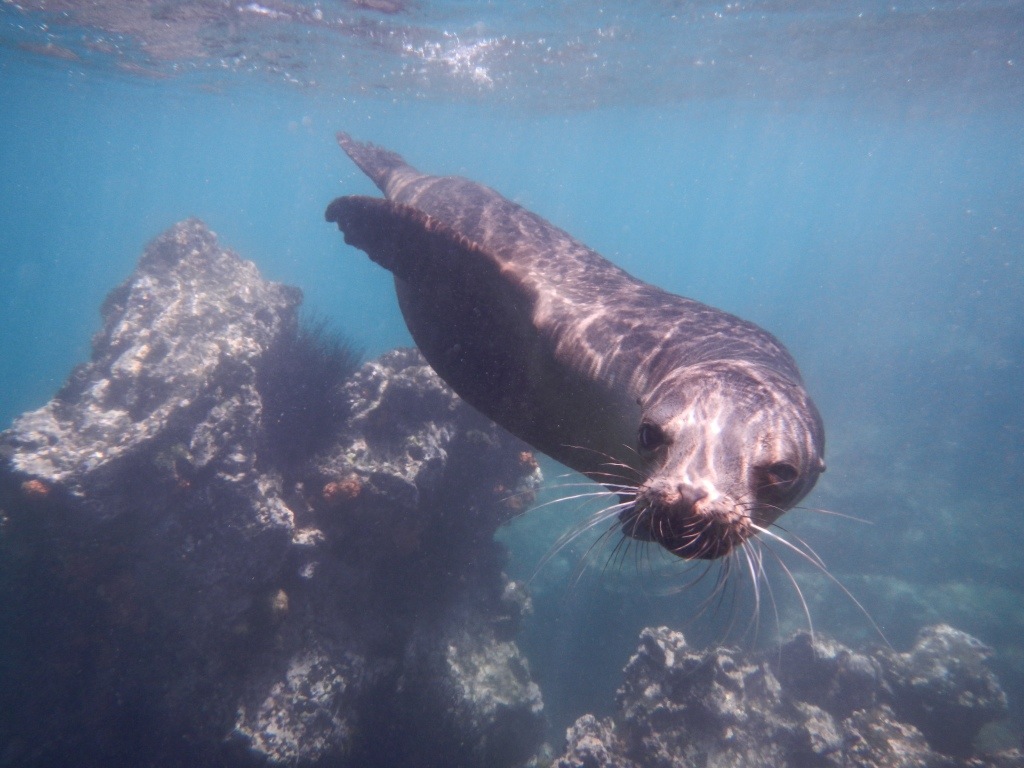 The sea lions are so inquisitive that we often ran into them whilst snorkelling
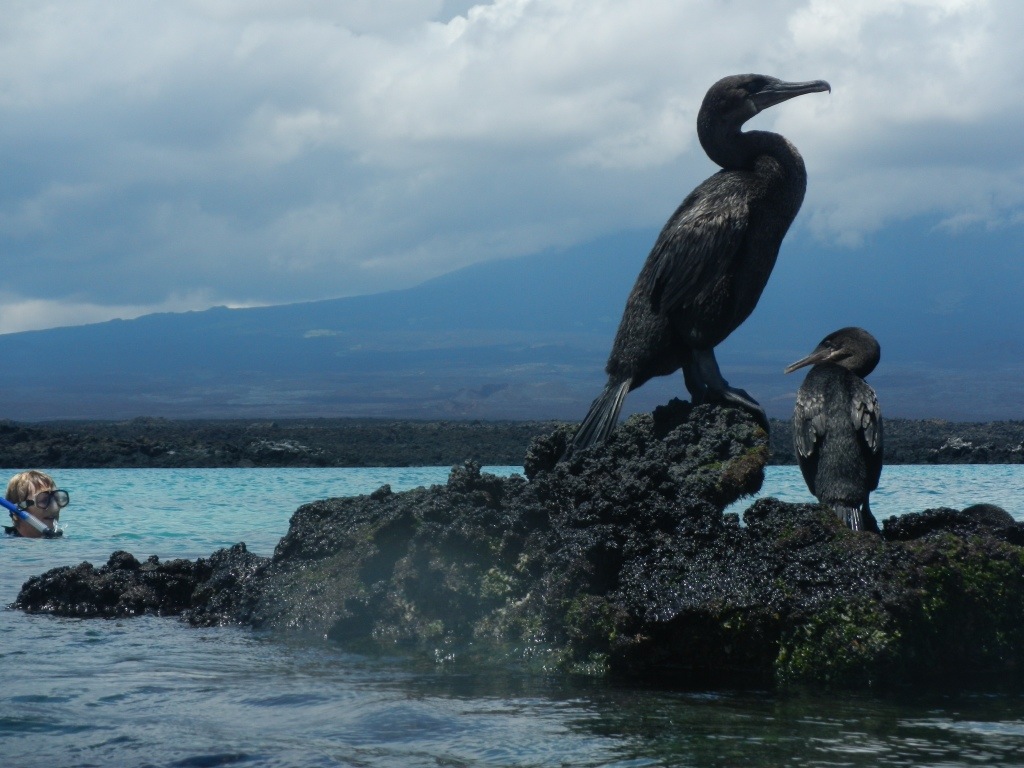 We found we could sneak up on some of the cormorants by snorkelling under water and then surfacing just in front of them, camera ready. Unfortunately, the big one on the rock got a bit pissed off with me and made a charge for me shortly after I took this photo! Notice Chez just off to the left.
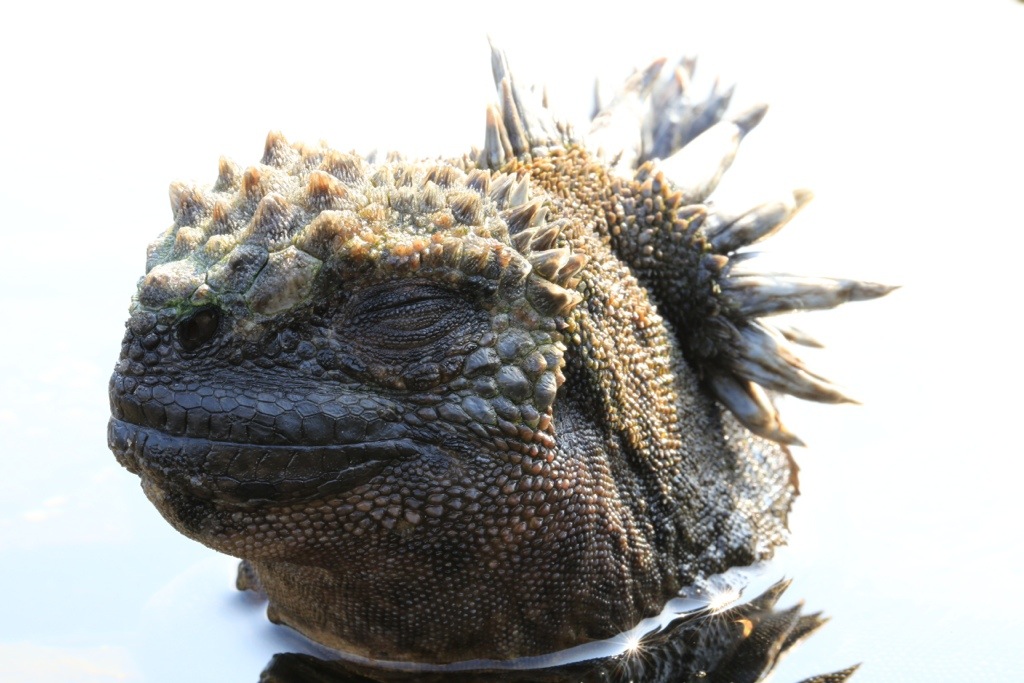 Marine iguana taking a dip in a warm rock pool. What a life.
 The frigate birds would often use the updraft caused by our boat. They would stay there without moving their wings for hours.
 Galapagos Hawk
 Bartolome Island
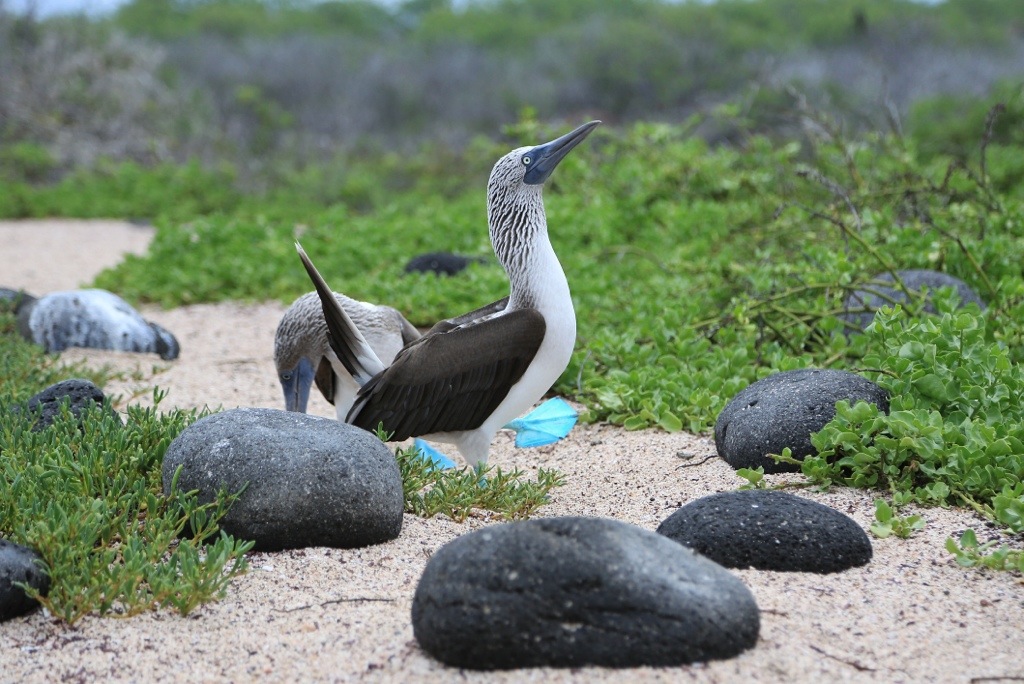 These Blue Footed Boobies were doing their mating dance. Apparently, the higher the male lifts his feet, the sexier he is. This guy was doing pretty well with the ladies.
 This is how close we could get to the frigate birds.
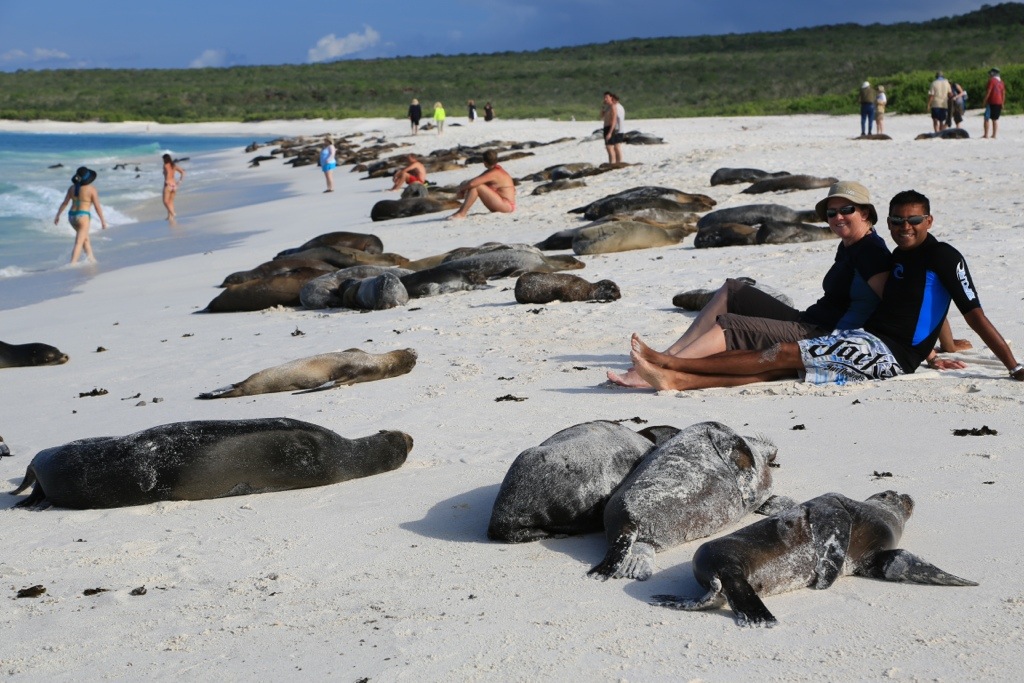 Sharing the beach with the locals.
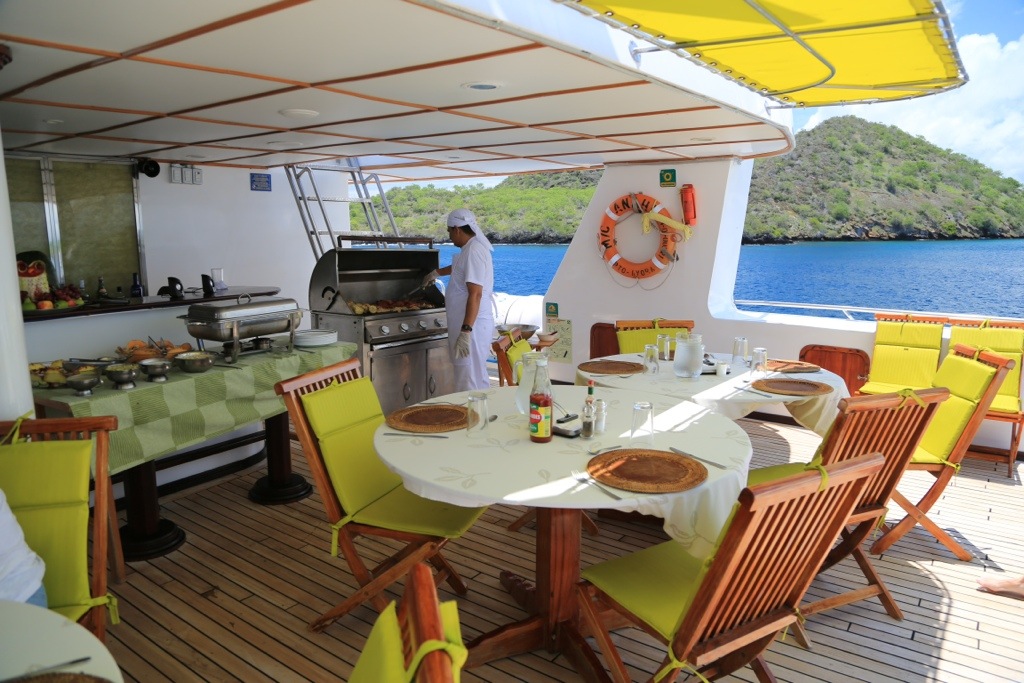 Roughing it on our first boat, the Anahi. Damn, it’s a hard life. Just off to the right was the jacuzzi.
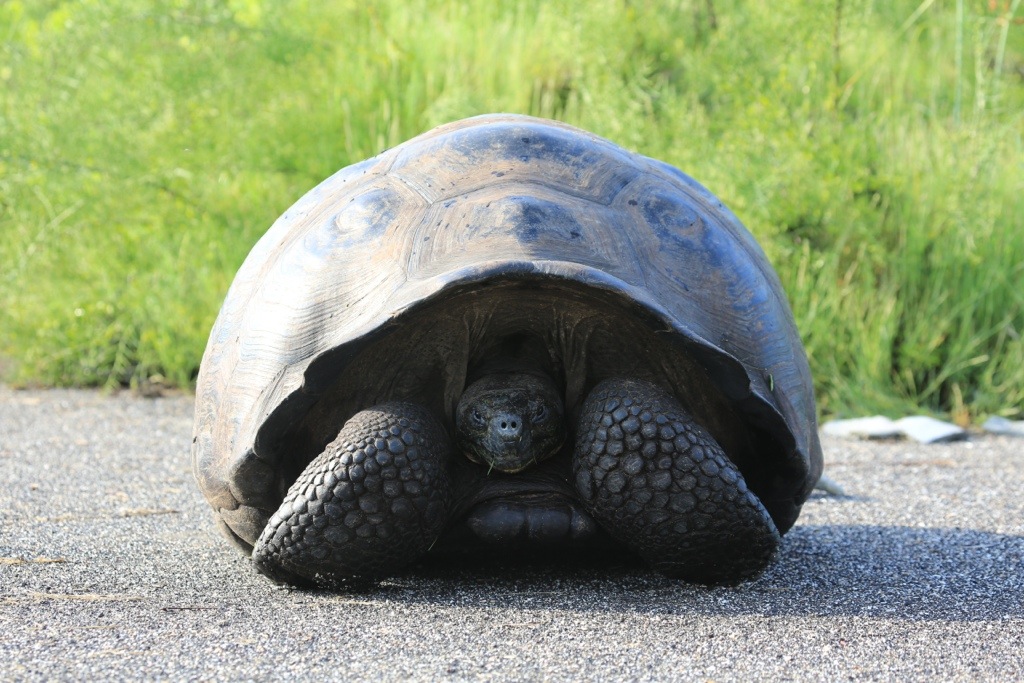 This guy was moving for nobody.
The Sea Lions in the Galapagos have so much food that they have a lot of spare time to just generally stuff around and live the good life. One of their pass times is annoying the iguanas. Marine iguanas can only stay in the water to feed for about 10 minutes before they get too cold and their muscles seize up. If they’re in the water when that happens, they could drown. The sea lions purposely grab their tails and try to stop them from getting back to shore. This young sea lion is practicing his skills at annoying the iguanas. When the first one gets away and he spots the next, he tries to hide but doesn’t realise that his butt is still sticking out of the water!
This is just one of our encounters with the sea lions whilst snorkelling.
There were white tipped reef sharks in many of the places we snorkelled as well as hammerheads in places. Apparently they don’t eat people!


 cheznmal
You guys just like rubbing it in! Awesome photos and wonderful experiences!